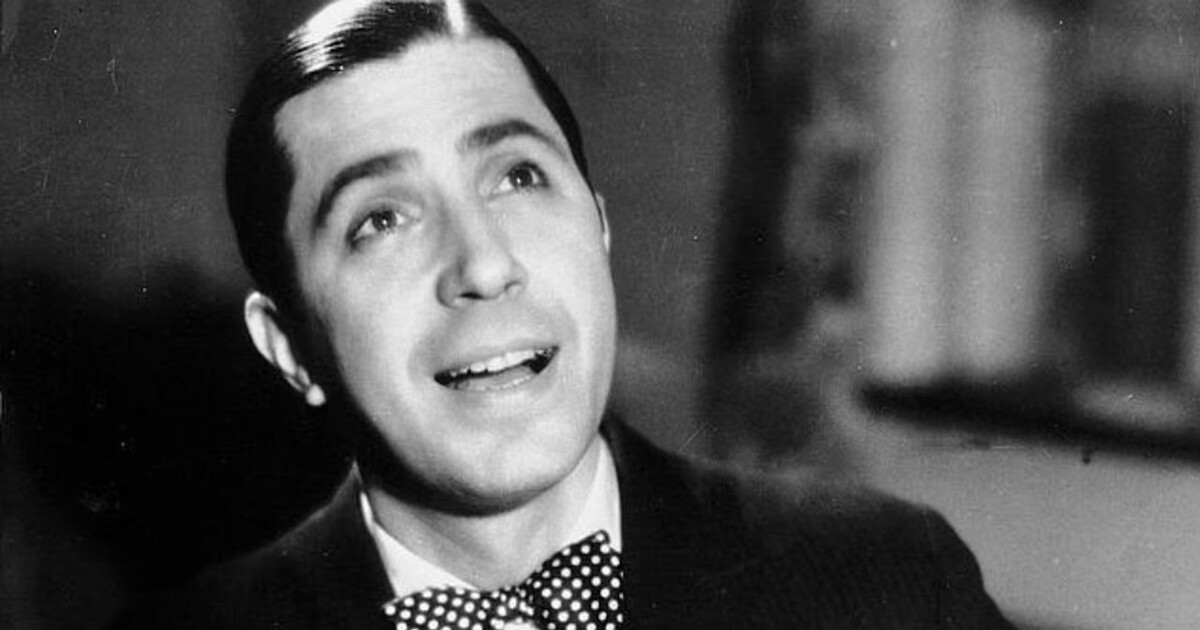
Buenos Aires, January 10 (NA) – The prolonged debate over the nationality of Carlos Gardel has entered a new chapter following the discovery of a 1920 document. According to researchers from the Rioplatense Gardel Commission, it supports the hypothesis of a Uruguayan origin for tango's greatest icon. While the act provides relevant data, specialists agree that it does not definitively conclude a discussion that has lasted for decades.
The research was presented to the public in December, but gained greater traction this week after the publication of an article in the Uruguayan weekly magazine Búsqueda. The document in question pertains to a procedure carried out by Gardel on October 8, 1920, at the Uruguayan Consulate in Buenos Aires, when the artist still did not have personal documentation in order or recognized paternity.
According to the consular register—recorded on folio 907 of the Nationality Registry under number 10,052—Gardel declared that he was born on December 11, 1887, in Tacuarembó. The act also lists his profession as artist, his address at 451 Rodríguez Peña street in the city of Buenos Aires, and his parents as Carlos (surname not recorded) and María Gardel, both Uruguayan and already deceased at that time.
The certificate was issued with number 20,393 and had as witnesses the Uruguayans Juan Lagisquet and José Razzano, the latter being Gardel's artistic partner and representative for much of his career.
For the Rioplatense Gardel Commission—comprising researchers and cultural managers from Argentina and Uruguay—the document reinforces a known documentary line, although they acknowledge that other records exist that have fueled different versions about the singer's origin. In this regard, they recall that Gardel used documentation throughout his life that defined him as a naturalized Argentine, a condition that is also compatible with the 1920 consular declaration.
Argentine researcher Martina Iñíguez, a member of the commission, has repeatedly stated that the legal documents used by Gardel point to a birth in Tacuarembó. Among other elements, she mentioned having verified his early school attendance in Montevideo, where he would have attended the first lower grade between 1891 and 1893, a fact that led to the placement of a commemorative plaque in the Uruguayan capital in 2018.
To these precedents are added public statements by Gardel himself in 1933, when in journalistic interviews he affirmed he was born in Tacuarembó and explicitly defined himself as Uruguayan. There is also a Venezuelan identity card processed in 1935, shortly before his death, in which he declared he was born in Uruguay and had subsequently acquired Argentine nationality.
Nevertheless, historians and biographers warn that the set of known documents reflects a complex web, traversed by common practices of the era, such as re-registrations, late declarations, and legal strategies linked to the artist's international career. For this reason, while the 1920 act provides a new significant element, it is unlikely to definitively close a controversy that is part of the Gardelian myth itself and the cultural history of the Río de la Plata.